Some chest pain means call 911 now. Some means see a cardiologist this week. Most chest pain is not the heart at all.
Knowing which is which is the difference between an ambulance and an antacid.
What Counts as Chest Pain
Dr. Patel defines it broadly, and it helps to start there. Think of the chest as everything below your jaw and above your diaphragm. Think of pain as any unwanted sensation: dullness, heaviness, aching, tightness, squeezing, or numbness. Anything new in that box counts, and people talk themselves out of appointments because what they feel isn’t sharp enough to call pain.
Call 911 for These
Do not drive yourself. Do not wait to see whether it passes.
- Chest pressure, squeezing, crushing, or tightness lasting more than a few minutes, especially at rest.
- Pain spreading to either arm, the jaw, neck, shoulder, or upper back.
- Chest pain together with shortness of breath, sweating, nausea, or lightheadedness.
- Sudden, severe tearing or ripping pain in the chest or upper back. This can mean a tear in the aorta, which is a surgical emergency.
- Chest pain with a racing or irregular heartbeat and near-fainting.
- Chest pain in anyone with known heart disease or diabetes.
- Chest pain that wakes you from sleep and does not settle within minutes.
Call 911 rather than driving. Paramedics start the assessment on the way, and an ambulance gets you past the waiting room.
When to See a Cardiologist Instead
Plenty of chest pain sits in the middle. Not an ambulance, but not something to sit on either.
Pain Brought On by Exertion, Relieved by Rest
Discomfort that shows up when you exert yourself and eases within minutes of stopping is the textbook pattern for stable angina. The arteries are narrow enough to limit blood flow when the heart works harder, but not blocked. The National Heart, Lung, and Blood Institute describes this as the predictable form of angina.2
Predictable is not the same as harmless. Call for an appointment within the week.
New Shortness of Breath with Chest Discomfort
When the two arrive together, especially during something ordinary like climbing a flight of stairs, the question is whether the heart is pumping effectively. That points toward heart failure, a valve problem, or coronary disease. An echocardiogram sorts out which.
Pain That Persists After a Normal Workup
Your primary care doctor ran labs, did an ECG, found nothing, and the pain is still there. That is where a cardiologist adds something. A resting ECG is a snapshot of a heart at rest. A stress test, a calcium score, or imaging can find what the snapshot missed.
Chest Discomfort in Women
Heart disease in women often looks different. Pressure, fatigue, or nausea rather than crushing pain. Discomfort in the jaw, back, or upper abdomen. The NHLBI notes that women may wait longer for an initial ECG and are less likely to be referred for diagnostic tests or seen by a heart specialist in hospital.5
If your symptoms feel vague or don’t match what you expected, ask for the referral anyway.
Chest Discomfort with Dizziness or Near-Fainting
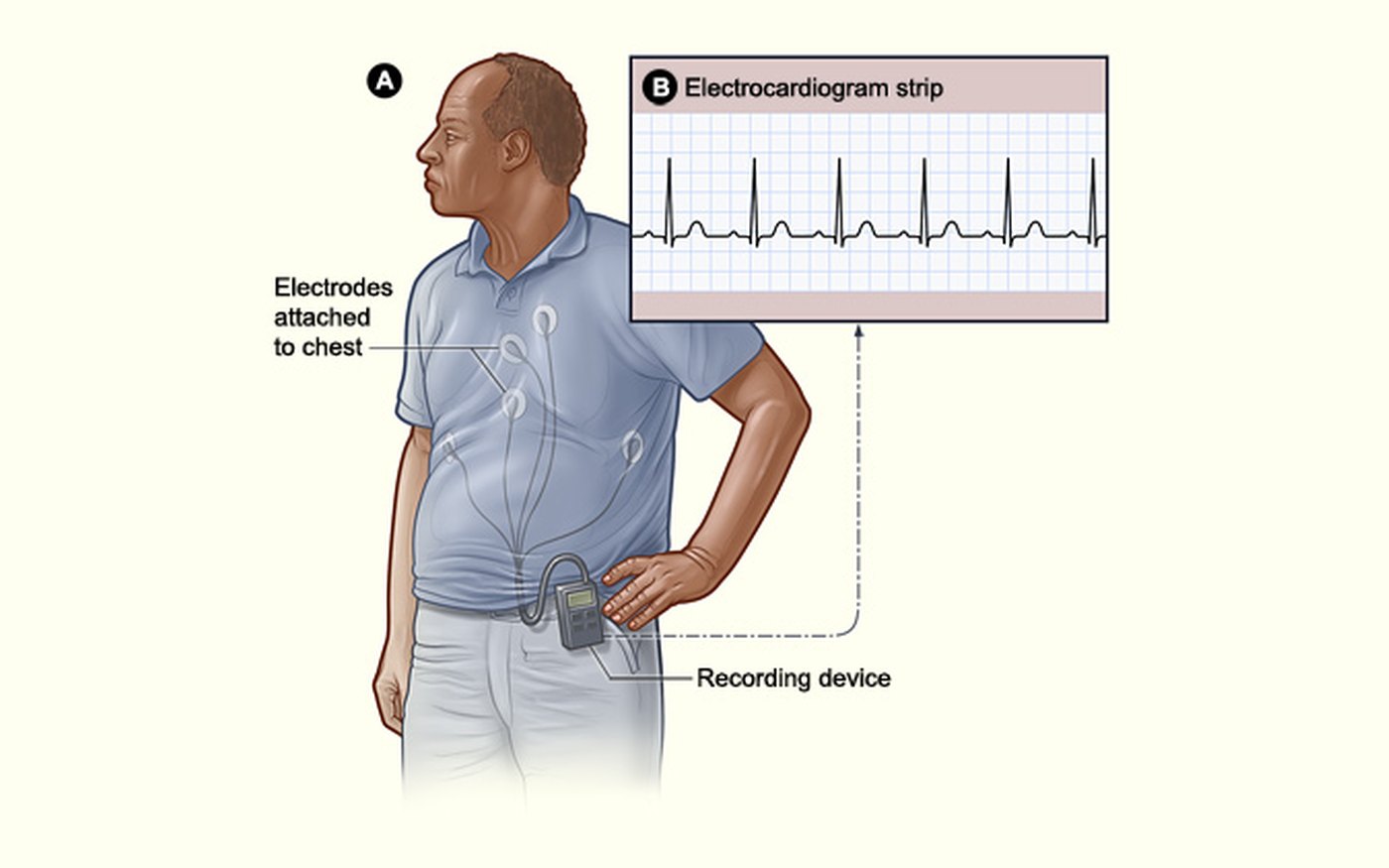
Chest discomfort plus dizziness or graying out raises a question about the heart’s rhythm or its output. Arrhythmias produce exactly that pairing. An ECG catches one that is happening now. A Holter monitor catches one that only shows up occasionally.
Chest Pain with Early Heart Disease in the Family
The NHLBI counts it as early heart disease in the family if your father or brother was diagnosed before 55, or your mother or sister before 65.4 That raises your own risk. Chest pain on top of that history deserves a look.
Quick reference:
| Symptom pattern | What to do | When |
|---|---|---|
| Crushing pressure spreading to arm or jaw | Call 911 | Now |
| Tearing or ripping pain in chest or back | Call 911 | Now |
| Chest pain with sweating, nausea, faintness | Call 911 | Now |
| Brought on by activity, relieved by rest | See a cardiologist | Within days |
| With unexplained shortness of breath | See a cardiologist | Within days |
| With dizziness or near-fainting | See a cardiologist | Within days |
| Persists after a normal primary care workup | See a cardiologist | 1 to 2 weeks |
| Vague or atypical discomfort, any pattern | See a cardiologist | 1 to 2 weeks |
| Sharp pain reproduced by pressing on a rib | Primary care | When convenient |
| Burning pain relieved by antacids | Primary care | When convenient |
Cardiac or Not: Why It Is Hard to Tell
Cardiac chest pain happens when heart muscle isn’t getting enough oxygenated blood. The usual cause is narrowed or blocked coronary arteries, which is coronary artery disease . Heart disease is the leading cause of death in the United States, and the Centers for Disease Control and Prevention counted 919,032 cardiovascular deaths in 2023, about 1 in every 3 deaths.1
Non-cardiac pain comes from the esophagus, lungs, ribs, muscles, nerves, or anxiety. Reflux is the most common single impostor, and it can produce burning pressure across the center of the chest that feels a great deal like angina.
That overlap is the whole problem. The sensation alone does not settle it. History, an exam, an ECG, and sometimes a stress test or imaging do.
Heart-related causes include:
- Angina, stable or unstable
- Heart attack
- A tear in the aorta
- Pericarditis, inflammation of the sac around the heart
- Myocarditis, inflammation of the heart muscle
Causes outside the heart include:
- Reflux and esophageal spasm
- Costochondritis, inflammation where the ribs meet the breastbone
- A pulled chest wall muscle
- Pleurisy or a blood clot in the lung
- Panic attacks and anxiety
- Shingles affecting the chest wall nerves
Angina, and What the Word Means
Angina is a symptom of coronary disease, not a diagnosis of its own.
Stable angina is predictable. Climb two flights, feel the pressure, stop, and it clears in a few minutes. Unstable angina is not predictable. It comes at rest, lasts longer, and follows no pattern you can plan around. That one is an emergency.
There is also a form driven by spasm rather than plaque, where a coronary artery temporarily clamps down. The NHLBI calls it vasospastic angina, and you may also see it called variant or Prinzmetal angina. It tends to strike at rest and is worth recognizing because the arteries can look relatively clear.
What Happens at the Appointment
History and Examination
We ask where it is, what it feels like, how long it lasts, what brings it on, and what makes it stop. Those answers separate the patterns that point at the heart from the ones that point at the chest wall, the esophagus, or anxiety. Write your answers down before you come, including when it started and how often it happens.
ECG
A 12-lead ECG is painless, takes about 5 minutes, and shows rhythm problems, electrical abnormalities, and signs of a heart attack you may have already had. It is almost always first, and we do it in the office.
Blood Work
Troponin is the marker for injured heart muscle. If the pain is recent, we check it. Cholesterol, blood sugar, and inflammatory markers fill in the risk picture.
Stress Testing
A stress test watches the heart while its workload climbs. On a treadmill, an ECG runs while you walk at increasing speed and incline. If walking isn’t practical, medication can produce the same effect. Adding ultrasound shows how the heart walls move, and a nuclear version tracks blood flow.
Coronary Calcium Score
A CT scan of about 10 minutes that scores calcified plaque in the coronary arteries. A zero in someone at low or moderate risk is reassuring. A high score moves the conversation toward aggressive prevention.
Catheterization
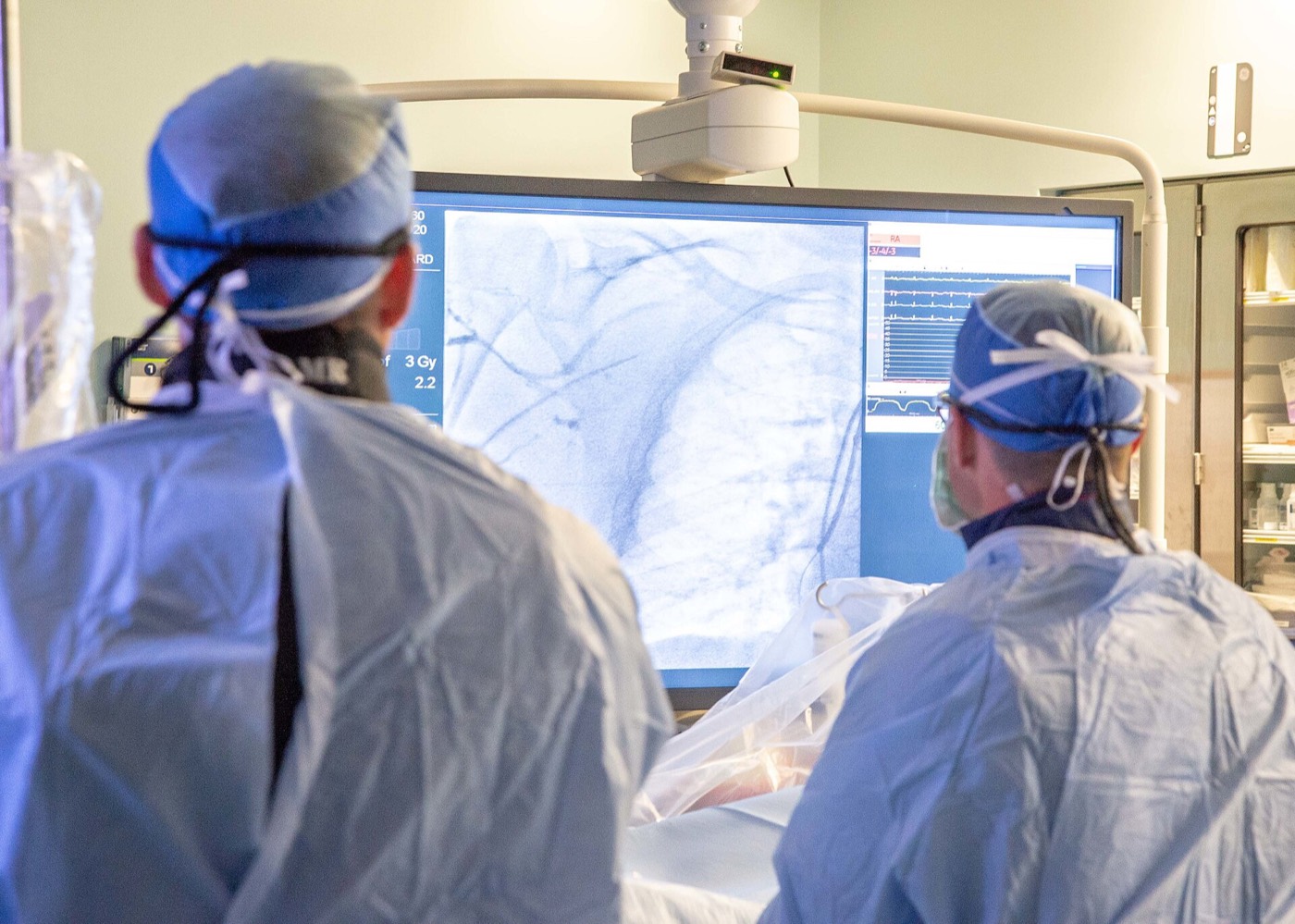
When the non-invasive tests point to a significant blockage, catheterization shows it directly. Contrast dye goes into the coronary arteries under X-ray. Dr. Patel is an interventional cardiologist, which means the same physician who finds the blockage can open it, in the same building as the office where clinically appropriate.
The Pain That Is Not Your Heart
Most chest pain is not cardiac. That is good news, and it still deserves an explanation.
Muscles and ribs. Costochondritis produces pain that is sharp, stays in one spot, and hurts more when you press on it. A pulled muscle between the ribs feels similar. Neither is dangerous, and both are frightening if you don’t know what they are. Tenderness at a specific point on the chest wall is a strong clue.
Reflux and the esophagus. Reflux burns behind the breastbone and can travel toward the throat. Esophageal spasm produces sudden severe pain that fools experienced clinicians. Eating, lying down, and stress all set them off.
A blood clot in the lung. Sharp pain that worsens when you breathe, with shortness of breath and a fast heartbeat. This is an emergency room problem, not a clinic appointment.
Anxiety and panic. Panic attacks produce genuine chest tightness, a pounding heartbeat, and breathlessness. The National Institute of Mental Health describes attacks that can last from a few minutes to an hour or longer, often with chest pain and a fear of impending doom.8 Plenty of people arrive in emergency departments with chest pain and leave with a panic disorder diagnosis. The symptoms are real. The treatment is just not cardiac.
Risk Factors That Move You Up the Queue
Any of these lowers the threshold for getting chest pain evaluated quickly.
- High blood pressure. 130/80 or higher on repeated readings, per the NHLBI.3 We cover this in detail on our high blood pressure page .
- Diabetes. Adults with diabetes are about twice as likely to have heart disease, according to the CDC.7
- Smoking. It damages artery walls and speeds plaque formation.
- High LDL cholesterol. The cholesterol that drives plaque buildup.
- Excess weight and inactivity. Both compound nearly every other risk factor.
- Age. The NHLBI counts age 45 or older in men and 55 or older in women as a risk factor.6
- A previous cardiac event. New chest pain after a heart attack, a stent, or bypass surgery needs re-evaluation quickly.
What Waiting Costs
Patients dismiss chest discomfort for weeks because it isn’t that bad. Some arrive having already had a heart attack, with heart muscle that is permanently weakened. Muscle that dies during a heart attack does not grow back.
That is the reason emergency systems are built around speed, with treatment targets measured in minutes from hospital arrival to opening the artery. Every minute of blocked blood flow costs more tissue.
Sitting out one or two brief episodes that fit a harmless pattern is reasonable. Waiting weeks while symptoms keep going or get worse is not.
Before Your Appointment
- Write down the history. When it started, how long episodes last, what brings it on, what relieves it.
- List your medications, including supplements and anything over the counter.
- Bring old ECGs and lab results if you have them. Comparing an old tracing against a new one shows whether a finding is new or has been there for years.
- Note the family history. Heart attacks, strokes, or sudden death in close relatives, and at what ages.
- Be straight about smoking, alcohol, and activity. We cannot assess risk accurately without it.
- Bring someone with you. A second set of ears catches what you miss.
Common questions about chest pain
Should I go to the ER or see a cardiologist for chest pain?
How do I know if chest pain is coming from my heart?
Can anxiety cause chest pain that feels like a heart problem?
What does a cardiologist do that a primary care doctor doesn't?
Is left-sided chest pain more serious than right-sided?
Can a woman have a heart attack without chest pain?
Sources
- Centers for Disease Control and Prevention. Heart Disease Facts. Reviewed 2025. cdc.gov
- National Heart, Lung, and Blood Institute. Angina (Chest Pain): Types. Updated 2024. nhlbi.nih.gov
- National Heart, Lung, and Blood Institute. High Blood Pressure. Updated April 2024. nhlbi.nih.gov
- National Heart, Lung, and Blood Institute. Coronary Heart Disease: Risk Factors. Updated December 2024. nhlbi.nih.gov
- National Heart, Lung, and Blood Institute. Coronary Heart Disease: Women and Heart Disease. nhlbi.nih.gov
- National Heart, Lung, and Blood Institute. Heart-Healthy Living: Understand Your Risk. Updated March 2022. nhlbi.nih.gov
- Centers for Disease Control and Prevention. Diabetes and Your Heart. Reviewed 2024. cdc.gov
- National Institute of Mental Health. Panic Disorder: When Fear Overwhelms. nimh.nih.gov